
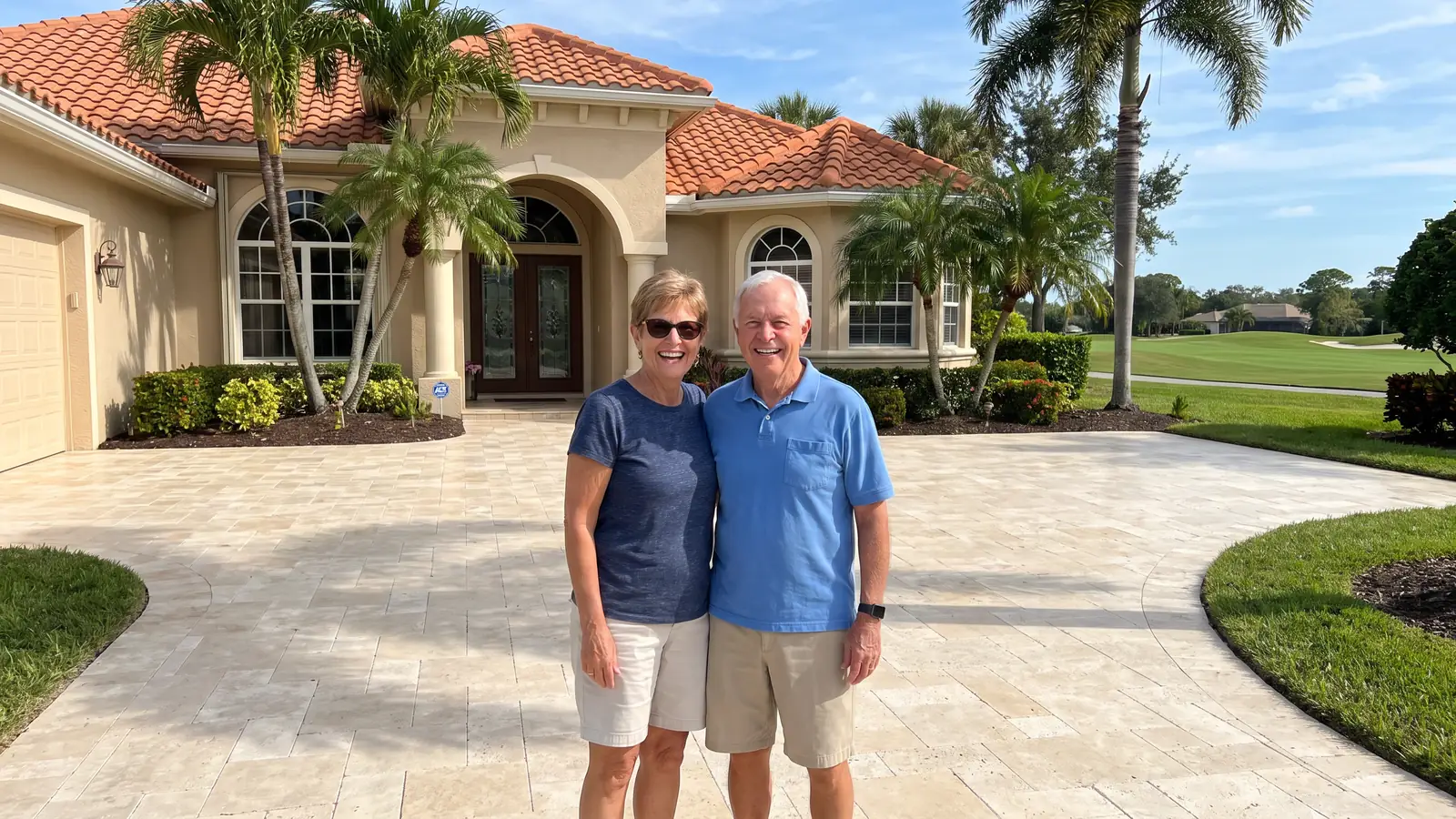
Paver sealing for Sandalwood homes
Paver Sealing in Sandalwood, FL
Sandalwood's median home dates to 1973, so call (904) 849-6284 to have joints, base and old coats checked.
- Brings out deeper paver color
- Fresh joint sand helps lock pavers in place
- Gives weeds less room to grow
- Makes the surface easier to keep clean
- Free estimate, no obligation
Request a Free Estimate
Free, no obligation.
Fast, careful paver sealing in Sandalwood
Paver sealing in Sandalwood is open to homeowners on the older 1960s streets and the newer ones alike. A free estimate is standard, and you will hear back within 1 business day, usually much sooner. The contractor repairs low spots, then washes, re-sands and seals driveways, patios and walkways. To begin, ask for your free estimate.
Say the paved walk to your front door has sunk a little at one end, with sand gone from the joints beside it. A repair, a wash, new sand and one even coat make that walk look cared for again. If you want to describe yours first, call (904) 849-6284.
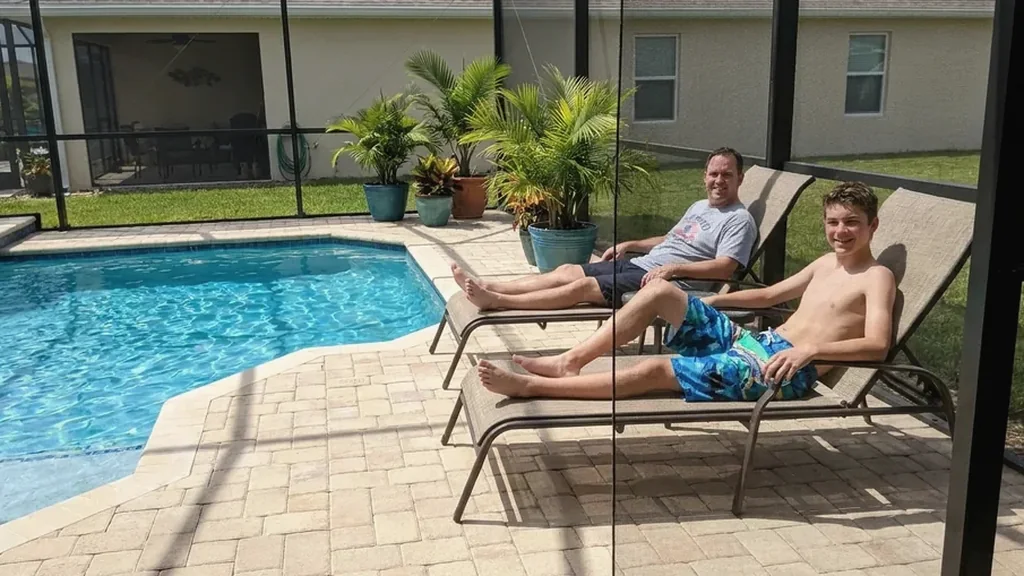
Why hire a local paver sealing contractor in Sandalwood?
Sandalwood homeowners pick a local contractor because decades of owners, flat sandy ground and heavy summer rain all shape the work. To hear how that fits your street, ask for your free estimate.
A free look first
A look at your Sandalwood pavers costs nothing, and a price comes before any promise from you.
Prices you can check
Regional prices spread from $1.75 to $3.25 per square foot for the whole job from wash to sealer. Hold any Sandalwood quote up to that, and ask what is included.
Fixes before finish
Sunken or lifted spots are reset before sealing, because a coat locks in whatever is there. You hear about them first.
No obligation
You choose the date and the finish. A Sandalwood estimate is free, and you can say no.
Get Your Free Estimate in Sandalwood
Tell us about your pavers in Sandalwood.
Free, no obligation
What paver problems show up most in Sandalwood?
Washouts that start in the joints
A Jacksonville paver company says the number one reason pavers fail is sinking and washouts. Unsealed joint sand washes out, and thunderstorm water then reaches the base layer and erodes it. Rain totals near 52 inches a year in Jacksonville, mostly from May to September, and Pottsburg Creek takes runoff from retention ponds and storm drains nearby. A Sandalwood driveway with thin joints is already on that path, so filling and sealing the joints costs less than resetting pavers later. Look at the joints along the edges and near the garage door first.
Flat sandy ground that stays wet
The USDA's Pottsburg soil series has its type location in Duval County. It is somewhat poorly and poorly drained fine sand on flats, with a seasonal high water table 0 to 24 inches down for part of the year. Treat that as county-wide background, not a reading of any one lot. Flat ground drains slowly, so a Sandalwood contractor waits for a dry surface before sealing. That can mean a day or two of delay after a storm, and it keeps the finish clear.
Oil-based coats from earlier owners
About 26 of Sandalwood's 296 homes change hands in a year, and 42 percent of parcels are not owner-occupied, based on a county-records profile. That means many sealing choices were made by people who have since moved. One Jacksonville company says pavers sealed with an oil-based product must be stripped first, which applies to about 10 to 20 percent of its projects. The contractor finds out what is on yours, and tells you before any work starts if stripping is needed.
Color bleached by open sun
A Jacksonville paver company says color looks washed out especially in sunny areas, and that UV breaks down color and sealers. Average highs in Jacksonville reach about 92 degrees in the warmest months. A driveway with sun on it most of the day gets the most of that, and a Hawaii Drive home from 1960 has seen more than 60 summers of it. Sealing brings the color back, and a wet look deepens it while matte keeps it natural. Ask to compare both before choosing, since changing finishes later means stripping.
Pavers added at different times
Sandalwood homes were built from 1960 to 2019, with a median year of 1973, so one street can hold original walks, a newer patio and a recent pool deck. Each was laid by someone different on a different base. Poor compaction under the pavers is one of the leading causes of sinking. A short front driveway and a long back patio can be two different jobs on two different bases. Expect the contractor to check each area on its own, and to quote the repairs and the sealing as separate lines if you ask.
Which Sandalwood streets get paver sealing, and do the older ones differ?
All of them can. Sandalwood began developing in the spring of 1960, midway between downtown Jacksonville and the beaches, and listings show homes from 1960 and 1961 on Hawaii Drive, 1962 on Indies Drive, 1980 on Weymouth Circle, 1984 on Alden Road and 2010 on Wynnfield Lakes Circle. Tell the contractor your street when you ask for your free estimate.
Pearce-Uible, the builder, also developed Southside Estates, San Jose and Arlington Manor, so the 1960 homes follow a postwar plan. Sandlewood Trace, with 125 homes built from 1960 to 1998, and Beach Road Farms, with 283 homes, are nearby communities. Older homes mean older pavers, and older pavers mean old coats. Call (904) 849-6284 and say how old your house is.
Sandalwood is also a place of rentals and resales, so many owners are new to their pavers. A county-records profile says 58 percent of parcels are homesteaded and 42 percent are not owner-occupied, including 14 percent held by a trust or LLC. One Jacksonville company says owners do not need to be present for the work. Ask what the contractor needs to see, then ask for your free estimate, and the estimate stays free either way.
What does paver sealing cost in Sandalwood?
For a clean, sand and seal, Northeast Florida companies commonly list $1.75 to $3.25 per square foot. A Sandalwood job is often a driveway and a walk, and a Jacksonville cost guide says smaller jobs cost more per square foot. Stripping an oil-based or failed coat adds cost. To price your driveway and walk, ask for your free estimate.
Repairs change the number too. Sunken or lifted pavers are reset first, and a weak base takes more time than a clean surface. Prep is slow, at two to three hours for each hour of sealing, by one Jacksonville company's account. Call (904) 849-6284 and describe any low spots, so the contractor can price them in.
| Paved area | Typical example | Clean, sand and seal |
|---|---|---|
| 300 sq ft | Small patio or walkway | $525 to $975 |
| 600 sq ft | Two car driveway | $1,050 to $1,950 |
| 1,000 sq ft | Large driveway or pool deck | $1,750 to $3,250 |
| 1,500 sq ft | Driveway plus pool deck | $2,625 to $4,875 |
Math based on the $1.75 to $3.25 per square foot that Northeast Florida paver companies published as of November 2026. Your contractor sets the actual price after seeing the surface. Repairs, leveling and stripping failed sealer are usually extra.
How does a paver sealing job work in Sandalwood?
Check the low spots and the old product
Median homes here are about 1,388 square feet inside, so jobs tend to be driveway-and-walk size, but each gets the full walk-through. The contractor walks the driveway, walk and patio and looks for sunken, lifted or drifting pavers. Those are reset first, since sealing locks in a surface as it is. Then comes the old coat, because oil-based sealer has to be stripped and the two sealer bases do not mix. Tell the contractor what you know about past owners, even if all you know is a name or a year.
Wash away the film and stains
The wash lifts gray film, mildew, tire marks and rust spots. A paver cleaning guide says incorrect pressure washing can remove joint sand, so the contractor sets pressure for the surface. Oil that has soaked in may need a second pass, and some stains stay faint even then. Expect this to be the longest step of the visit.
Refill the joints
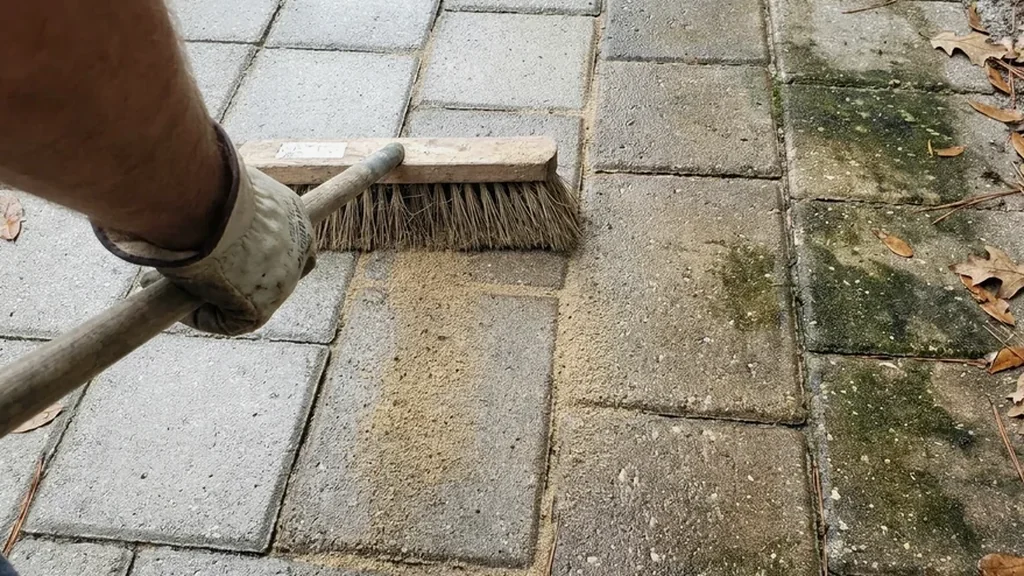
Fresh sand goes into every joint after the wash and is swept in until the joints are full, working toward the joints rather than off the edge, since sand lost to the street is wasted. Full joints keep the base from washing out and keep weeds and ants from moving in. On flat, sandy ground, this step protects the base underneath. A driveway that sheds sand after every storm is telling you the joints are due. Joints are filled before sealing, never after.
Wait for the flat ground to dry
Sealer needs a dry surface. Flat ground with a seasonal high water table can stay wet after a storm, and Jacksonville rain comes hard from May to September. Damp pavers under a fresh coat can go cloudy, and a cloudy coat has to be stripped and redone. Sandalwood sits about 38 feet up and outside FEMA flood zones, yet flat ground can still hold water for days. The contractor waits for dry pavers and a dry forecast, even when the neighbor's driveway looks dry.
Apply the sealer, then hold off traffic
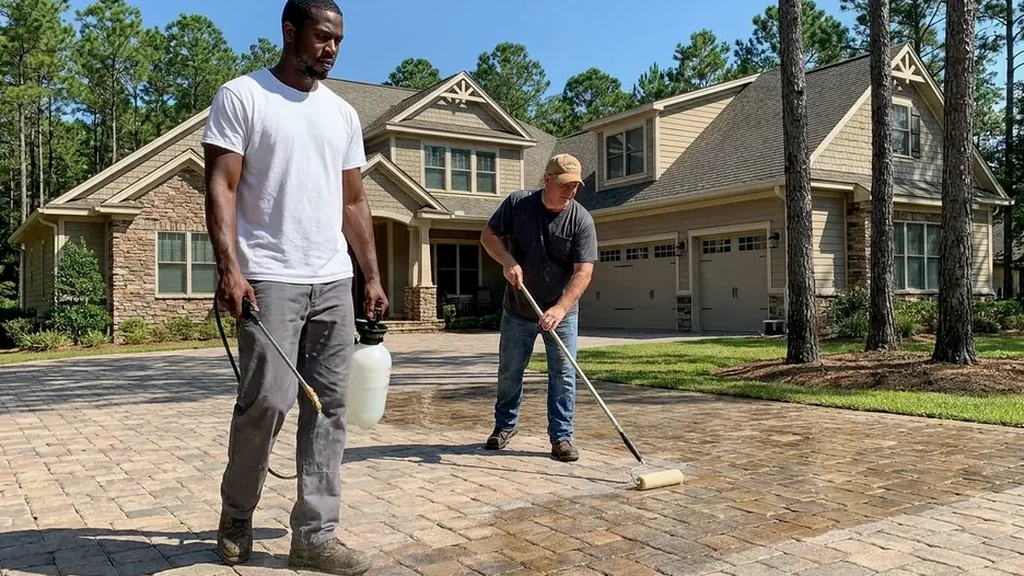
First comes the spray, and then a roller pushes the sealer down into the joints. A Jacksonville company says to wait 2 to 4 hours for foot traffic and a full day for vehicles. Another plans a two-day job and asks owners to stay off for about three days in all. Ask which timing fits the product on your pavers. Move the cars to the street or a neighbor's driveway first, with their permission, and plan where they stay.
Complete paver services in Sandalwood
Sandalwood work happens in four stages: repair, wash, re-sand and seal. Low spots are reset first, then the wash lifts film and stains. Fresh sand goes into the joints before the sealer goes on dry pavers. To hear how long each stage takes on your lot, call (904) 849-6284.
Driveways here carry daily traffic from tires. Front walks and patios see less weight but the same sun and rain. Pool decks need grip, so ask about the finish and any anti-slip additive. Tell the contractor which surfaces you have, and about how large each is, when you ask for your free estimate.
A film sealer sits on top of the pavers, and a penetrating sealer soaks in and leaves the look unchanged. A wet look deepens color, and matte keeps the natural appearance. Either way, the old coat decides what can go on first. Call (904) 849-6284 to talk through what suits your pavers.
Timing follows the weather. Rain peaks from May to September, and November through April stays drier. A job in the dry months has fewer weather delays, and a fall coat has the winter to cure and settle. To choose a date, ask for your free estimate.
Questions to ask before you hire
- Does my community's architectural review board need to sign off on the finish first?
- Can you get the white, chalky bloom off my pavers before you seal them?
- If ants dig sand out of the joints later, is that something you would come back for?
- What should I move off the driveway and patio before you arrive?
- How far out are you booking right now?
- Can you tell by looking whether the old sealer has to be stripped before the new coat goes on?
- How long should pavers that went in last year wait before they are sealed?
What do sealed pavers look like around Sandalwood?
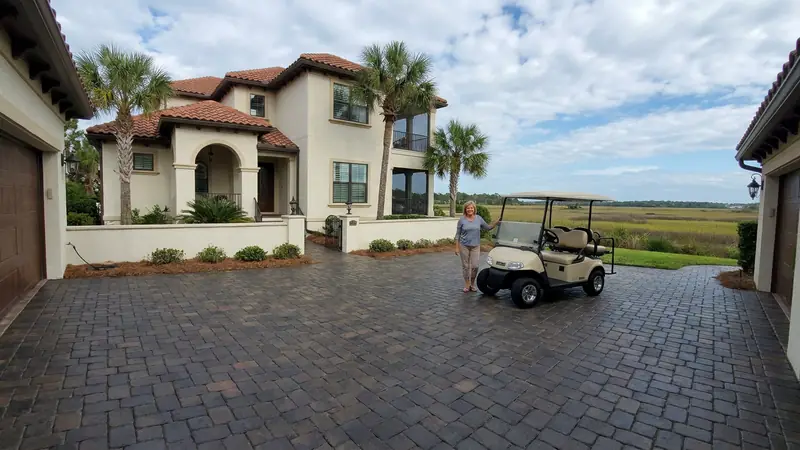
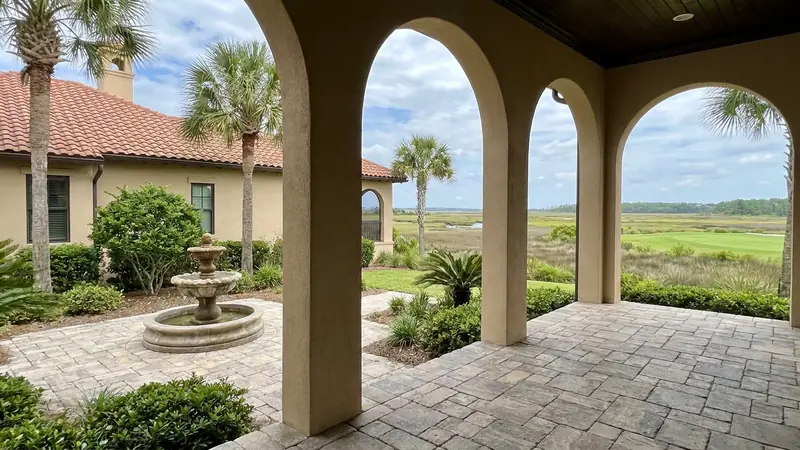
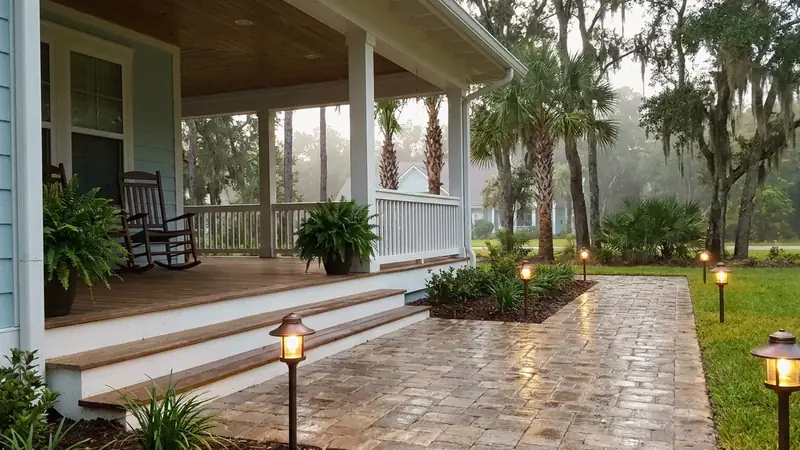
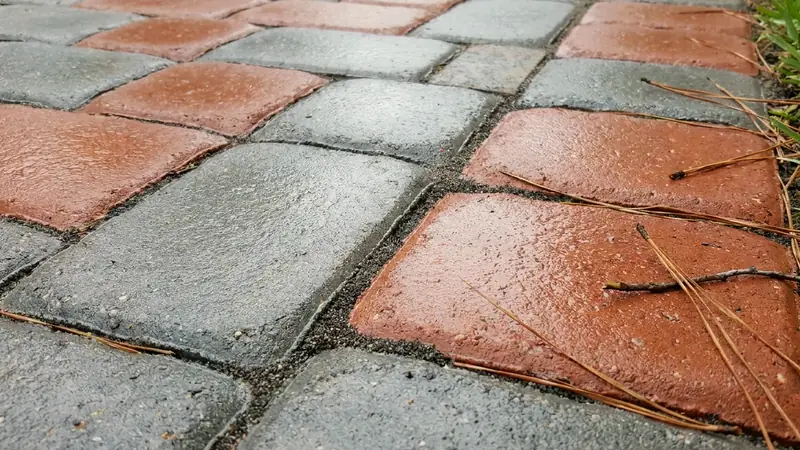
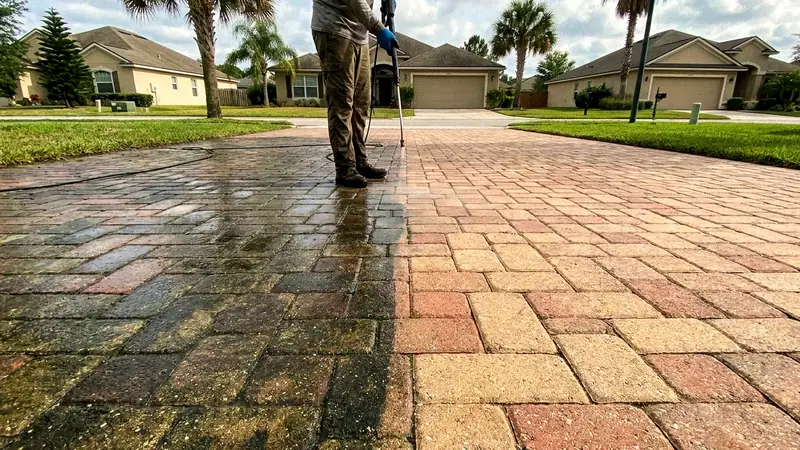
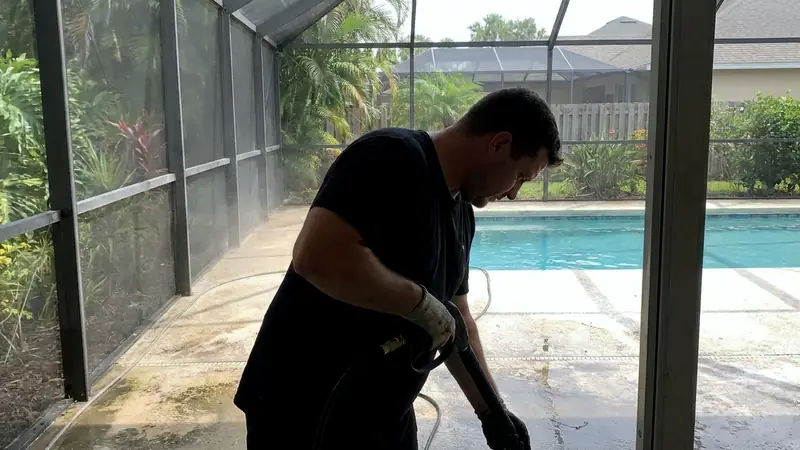
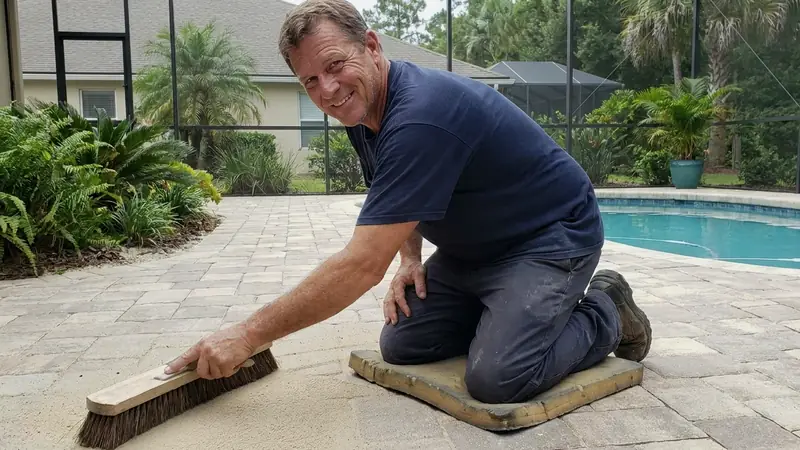
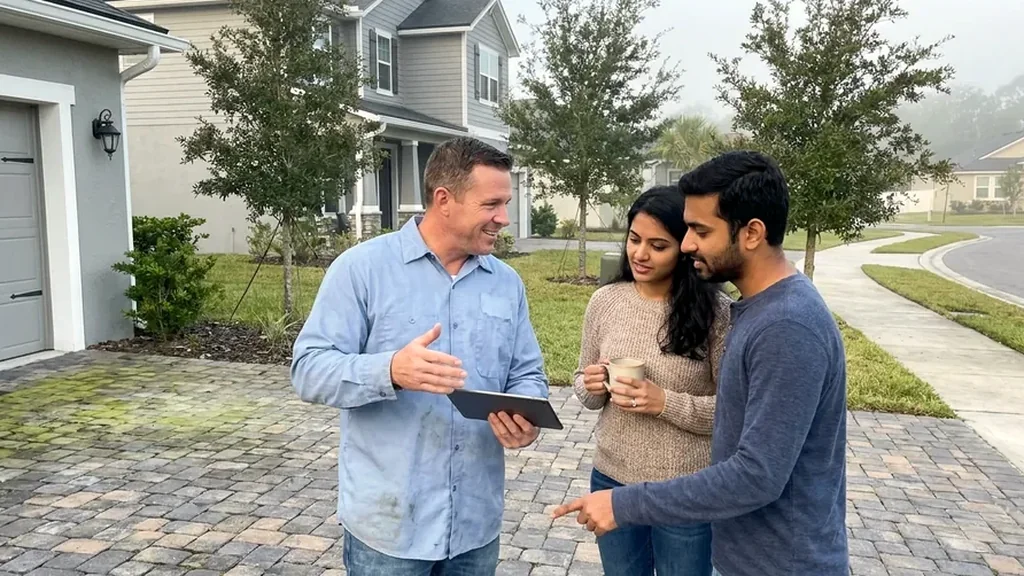
Why local matters in Sandalwood
A contractor who works Sandalwood knows the neighborhood began in 1960 and that the median home dates to 1973. That means old pavers, repaired spots and coats nobody wrote down. The contractor plans for all three and says so in the estimate. Call (904) 849-6284 to talk with a contractor who is familiar with these streets.
Local work also means knowing the ground. Sandalwood sits about 38 feet up, and none of the 25 geocoded homes in one profile are in a FEMA special flood hazard zone. Duval County soils are sandy and flat, so a local contractor waits for a truly dry surface and does not seal on a hopeful forecast. Ask how the schedule would work, and ask for your free estimate.
Sandalwood has many rentals and resales, with about 26 homes trading in a year. A contractor who works here is used to owners who inherited a driveway and never learned what is on it. The first visit sorts that out, with a look at the joints, the base and the surface. If that sounds like your home, ask for your free estimate.
What is near Sandalwood that helps someone find my street?
Sandalwood High School, at 2750 John Prom Boulevard, opened on September 7, 1971, and its outdoor pool becomes a free public pool in summer. Pottsburg Creek runs through the Southside and southern Arlington, fed by retention ponds and storm drains. If the school is your landmark, ask for your free estimate.
After the Mathews Bridge opened in 1953, the Arlington area grew faster than any other part of Jacksonville for two decades, and Sandalwood is one of its planned subdivisions. Nearby neighborhoods named on Walk Score include Park Ridge, Beachwood, Southside Estates and Sans Pareil, and Walk Score calls Sandalwood car-dependent, with almost all errands needing a car. Near any of these, call (904) 849-6284 and give a cross street.
Frequently Asked Questions
Why is paver sealing so expensive in Sandalwood?
Labor before the sealer takes most of the money. Quotes in the region run from $1.75 up to $3.25 per square foot for the whole clean, sand and seal. A small Sandalwood job can cost more per foot. The estimate names the area measured and the price per square foot.
Which water-based paver sealer should go on Sandalwood pavers?
The old coat decides first. A water-based coat cannot be laid over a solvent-based one, and one Jacksonville company says oil-based coats must be stripped. Get the product named, with its type, before you agree.
How many years does paver sealing last in Sandalwood?
Expect two to five years between coats. Sun fades color and breaks down sealers, so an open driveway may need attention sooner. If water stops beading and starts soaking in, it is time, and a quick splash test on a dry day will show you.
How much does it cost to have pavers cleaned and sealed in Sandalwood?
Regional prices run $1.75 to $3.25 per square foot for the full job. Stripping a failed or oil-based coat adds cost. A free estimate gives you the real number to hold against that range.
Can pavers sealed with an oil-based product be resealed in Sandalwood?
Not without stripping first. A Jacksonville company says pavers sealed before with an oil-based product must be stripped, which applies to about 10 to 20 percent of its projects. Stripping adds cost, so ask for it to be listed on the estimate.
Do I need to be home for paver sealing in Sandalwood?
Not for the work. A Jacksonville company says estimates are free and homeowners do not need to be present. Tell the contractor about gate codes, pets, sprinklers and where to park when you book, and the work can be planned around each.
How long should I stay off my Sandalwood pavers after sealing?
A Jacksonville company says to wait 2 to 4 hours for walking and 24 hours for cars. Others say a few hours and about a day, depending on the sealer and weather. Ask for the window for your product.
Will sealing stop my Sandalwood pavers from sinking?
No. Sealing locks in a surface as it is, so sunken pavers are reset first, and the contractor can point out each low spot so you see what is being fixed. Sealed joints do slow the washouts that often cause sinking, because unsealed joint sand washes out and storm water then erodes the base.
Does pressure washing damage paver joints in Sandalwood?
It can when pressure is too high. A paver cleaning guide says incorrect pressure washing can remove joint sand, and that mild detergent suits general dirt. The contractor refills the joints after the wash and before the sealer goes on.
Is sealing worth it on an older Sandalwood driveway?
Often yes, if the pavers are sound. Sealed pavers are easier to clean next time, and a Jacksonville company says they also see less weed and ant intrusion. If the base has settled, the repair comes first.
Can a contractor match joint sand to my Sandalwood pavers?
Often. One Jacksonville company says its joint sand comes in six colors to match any paver color, and that porosity and dirt affect its price. Ask what sand is used and whether it fits your pavers before the job starts, since the joints show on every walk and driveway.
What does a white, cloudy coat on a Sandalwood driveway mean?
Most often the sealer was laid over damp pavers or applied too thick. A Jacksonville company says a white, hazy or flaking coat from a past job has to be stripped before new sealer goes on. Point it out at the first visit so the estimate includes it.
Ready for a Free Estimate in Sandalwood?
Call (904) 849-6284 and tell us about your pavers.
Free, no obligation